

When homeowners in Jupiter and Palm Beach County start pricing a new driveway, patio, or pool deck, the decision usually comes down to pavers vs. stamped concrete. The two can look alike in a photo and come in at a similar price on day one, and many contractors will install whichever you ask for. The real question is which one holds up better through years of South Florida sun, rain, and shifting sandy soil, and which one is worth your money for the way you’ll actually use the space.
We install pavers, so we have a horse in this race, and we will be upfront about that. But stamped concrete is a legitimate product with real advantages, and pretending otherwise would not help you make a good decision. Here is an honest comparison of how the two stack up on the things that actually matter, and where each one makes sense. Contact Molina & Son Brick Pavers for more information.
The Quick Version
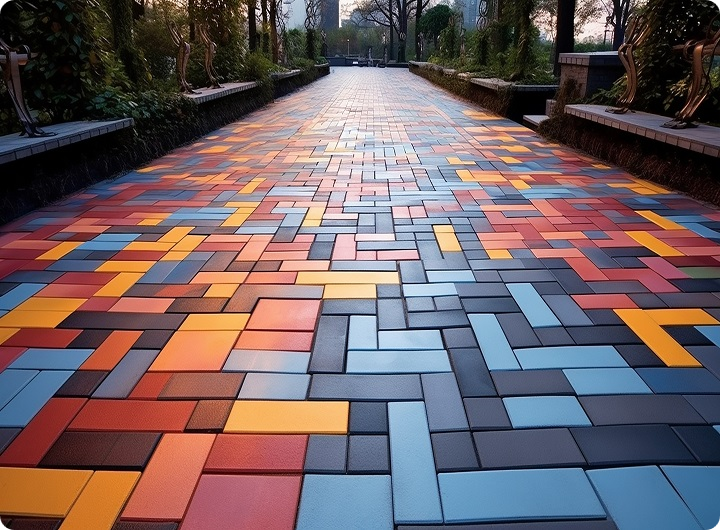
Stamped concrete is poured concrete with a pattern and color pressed into the surface before it cures, made to imitate the look of stone, brick, or pavers. Pavers are individual units of concrete, clay, or natural stone set by hand over a compacted base.
The core difference drives almost everything else: stamped concrete is one solid slab, and pavers are an interlocking system of many pieces. A slab is monolithic and cracks. A paver field flexes and can be repaired. That single distinction is behind most of what follows.
Where Stamped Concrete Wins

Let’s give it its due, because there are real points in its favor.
Lower upfront cost. Stamped concrete is usually cheaper to install than pavers, particularly on large open areas, because pouring a slab is less labor than laying units one at a time. If first-day budget is the deciding factor, stamped concrete often comes in lower.
Fewer joints. A stamped slab has no joints across its face except the control joints, so there are no seams for sand to wash out of and fewer places for weeds or ants to appear in the short term.
Fast installation. Pouring and stamping a slab is generally quicker than hand-laying a paver field of the same size, so the project is done, and the crew is gone sooner.
Those are genuine advantages, and for some projects and budgets they are enough. But they mostly describe day one, and a driveway or patio lives a lot longer than day one.
Where Pavers Win
Cracking is the big one. This is the heart of it. Stamped concrete cracks, and in South Florida it is a question of when, not if. Our sandy soil moves, the water table shifts, and a rigid slab poured over ground that does not hold still eventually cracks somewhere. When it does, the crack runs straight through the color and pattern, and there is no invisible fix, only a patch that never matches the stamped design.
Pavers are built to move. Because the surface is made of many individual units over a flexible base, it shifts with the ground instead of fighting it. There is no slab to crack. This is the single biggest reason pavers outlast stamped concrete in this climate.
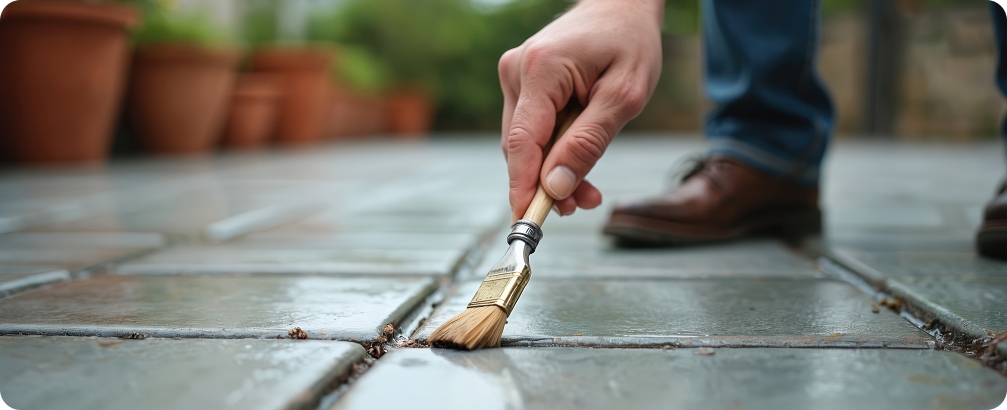
Repairability. When a paver cracks, chips, or a section settles, we lift the affected units, fix what is underneath, and set them back or swap in matching pavers. The repair disappears. When stamped concrete fails, your options are to live with the crack, patch it visibly, or resurface the area. A repairable surface is worth a great deal over the decades you own the home.
Color that lasts. Stamped concrete’s color is applied at the surface and it fades under UV; refreshing it means resealing or recoloring every few years to keep it from looking washed out. Quality pavers carry color throughout the unit, so they hold their tone far longer against relentless South Florida sun.
Slip resistance and heat. Many stamped concrete finishes get slick when wet, which matters a lot on a pool deck, and a sealed slab can run hot underfoot. Paver options like travertine stay cooler and offer better natural grip when wet, which is why travertine dominates pool decks in this market.
No resealing treadmill. Stamped concrete needs regular resealing to protect the surface color and finish, and skipping it shows quickly. Pavers can be sealed for added protection and color, but they do not depend on it to keep from looking bad, so the maintenance is more forgiving.
Resale and perception. Pavers are widely regarded as the premium hardscape material, and a paver driveway or deck tends to add more perceived value to a home than stamped concrete, which is sometimes seen as the budget imitation of the look it copies.
Head-to-Head On What Matters
- Upfront cost: Stamped concrete is typically lower on day one.
- Long-term cost: Pavers usually win once you factor in resealing, recoloring, crack repair, and lifespan.
- Cracking: Stamped concrete cracks with ground movement. Pavers flex and do not have a slab to crack.
- Repairs: Pavers repair invisibly. Stamped concrete repairs show.
- Color life: Pavers hold color longer. Stamped concrete fades and needs refreshing.
- Maintenance: Pavers are more forgiving. Stamped concrete needs regular resealing to look its best.
- Install speed: Stamped concrete is generally faster to install.
- Look over time: Pavers age better. Stamped concrete looks best when new and shows wear sooner.
The Pool Deck Question Specifically

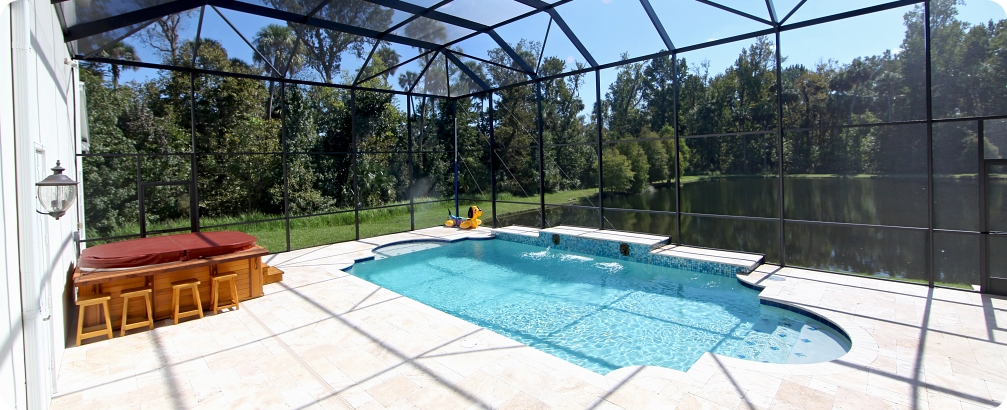
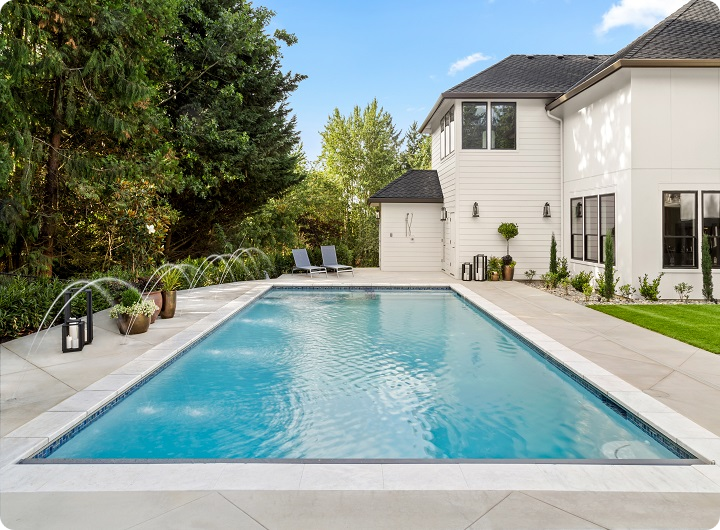
On a pool deck, the comparison tilts harder toward pavers than anywhere else. Heat and slip resistance are safety issues at the water’s edge, not just comfort, and this is where stamped concrete’s tendency to run hot and slick when wet matters most. Travertine and quality concrete pavers stay cooler and grip better when wet. Add the coping, which finishes a paver pool edge cleanly and comfortably, and the paver system is the stronger answer around water for most homeowners here.
The Driveway Question Specifically
On a driveway, the deciding factor is weight and movement. A driveway carries vehicles, and that repeated load on a rigid slab over shifting soil is exactly the recipe for cracking. Pavers handle vehicle weight through the interlock of the field and the base beneath, and when a utility cut or a settled spot needs attention, the driveway can be opened and closed without a visible scar. Over the life of a driveway, that repairability is worth a lot.
South Florida Realities Worth Planning For
A few things specific to Jupiter and Palm Beach County sharpen the choice. Our sandy soil moves, which is the core reason a flexible paver system outlasts a rigid slab here. The intense rainy season and high water table stress every surface and speed up the failure of a cracked or poorly drained slab. Relentless UV fades surface-applied color faster than most homeowners expect, which is why color-through pavers hold up better. And if you are in an HOA community, which is common across the county, either material usually needs architectural approval, so build that timeline in before ordering. A good contractor can hand you the specs you need for that submission regardless of which material you choose.
What Each One Costs, Roughly
On installation day, stamped concrete is usually the lower number, especially over large areas. Pavers cost more upfront because hand-laying units over a compacted base is more labor than pouring a slab. The picture changes over time: stamped concrete carries ongoing resealing and recoloring costs and, when it cracks, repair or resurfacing costs that pavers largely avoid, while a paver surface can be spot-repaired for a fraction of that and simply lasts longer. So the honest way to think about it is upfront price versus lifetime cost, and the answer depends on how long you plan to own the home and how the specific space will be used. The real number for any specific driveway, patio, or pool deck comes from measuring the space and looking at site conditions, which is exactly what a free on-site estimate is for.
Get An Honest Comparison From Molina & Son
Molina & Son Brick Pavers Inc. installs paver driveways, patios, pool decks, walkways, and retaining walls across Jupiter, West Palm Beach, Palm Beach County, and the Treasure Coast. We will walk your property, talk through whether pavers are genuinely the right call for your project and budget, and quote it honestly. If stamped concrete is truly the better fit for your situation, we will tell you that too.
Call 561-248-2509 (Palm Beach) or 772-242-0129 (Treasure Coast), or request your free estimate online.